

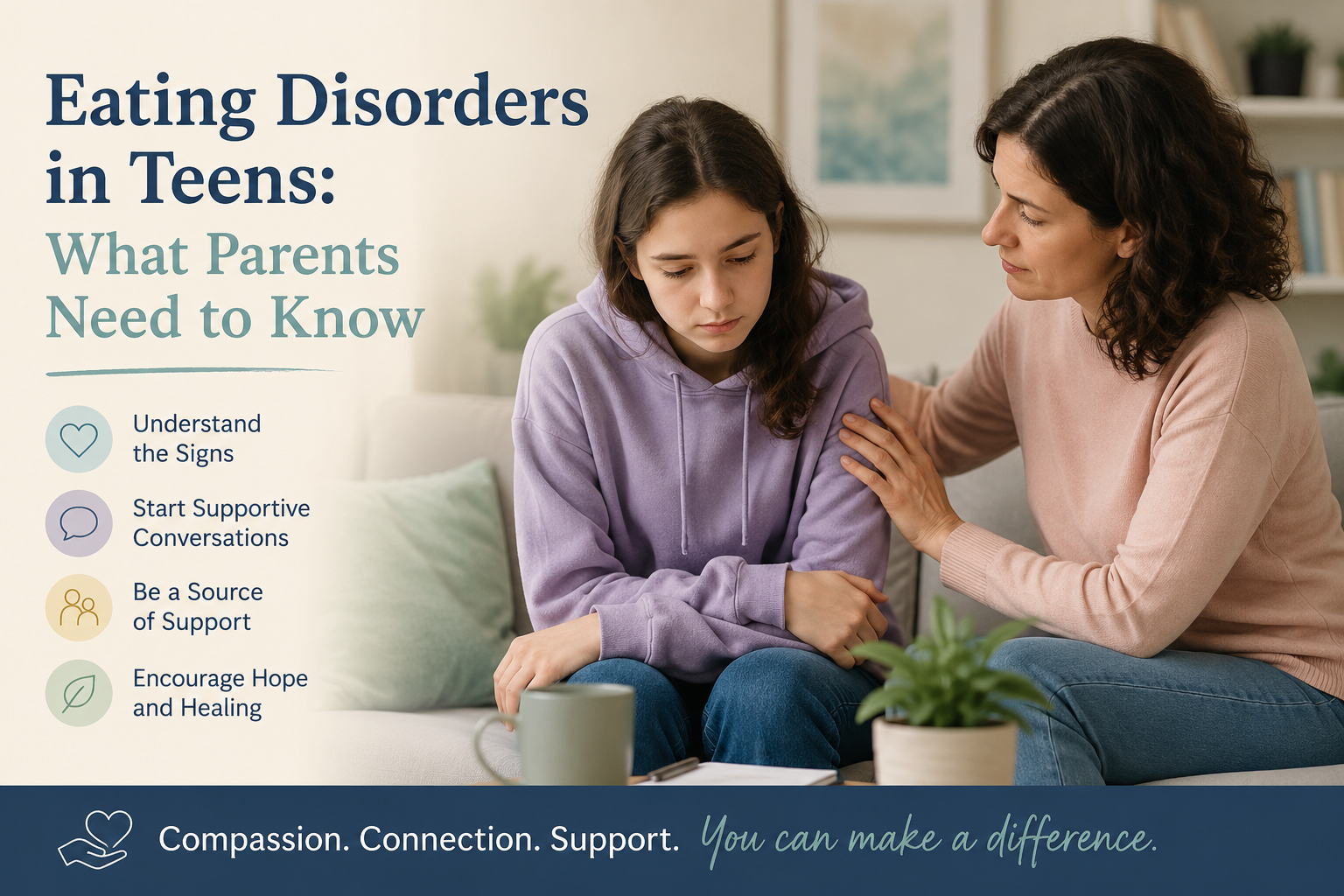
Eating Disorders in Teens: What Parents Need to Know
Eating disorders in teens can be difficult to recognize and even harder to address. Many parents feel confused, worried, or unsure of what is “normal” versus what may signal a deeper issue. The reality is that eating disorders are serious mental health conditions that often emerge during adolescence, and early intervention can make a significant difference in recovery outcomes.
Eating disorders are not about vanity or attention-seeking. They are often coping mechanisms—ways teens attempt to manage overwhelming emotions, regain control, or cope with distress (Treasure et al., 2020).
Why Eating Disorders Often Begin in Adolescence
Adolescence is a time of rapid physical, emotional, and social change. Teens are developing identity, navigating peer relationships, and becoming more aware of body image and societal expectations. These pressures, combined with factors like perfectionism, anxiety, trauma, or family dynamics, can increase vulnerability to eating disorders (National Eating Disorders Association, 2023).
Common Warning Signs Parents Should Watch For
Eating disorders don’t always look obvious, especially in the early stages. Some signs may be subtle or dismissed as “phases.”
Noticeable changes in eating habits, such as skipping meals, eating very little, or rigid food rules
Preoccupation with weight, calories, or “clean” eating
Withdrawal from family meals or social situations involving food
Frequent trips to the bathroom after eating
Sudden weight loss, gain, or fluctuations
Increased anxiety, irritability, or perfectionistic behavior
Excessive exercise or distress when unable to exercise
It’s important to note that a teen does not need to appear underweight to be struggling. Eating disorders affect individuals across all body sizes (American Psychiatric Association, 2022).
How Parents/Caregivers Can Respond Supportively
If you’re noticing concerning behaviors, how you respond matters. Many teens already feel shame or fear about their struggles, so a calm and compassionate approach is key.
Start with curiosity, not accusation. For example: “I’ve noticed you seem stressed around meals—can we talk about it?”
Avoid focusing on weight or appearance; instead, emphasize wellbeing and emotions
Keep communication open and non-judgmental
Maintain regular family meals when possible, creating a safe and calm environment
Contact a licensed professional who is specialized in treating eating disorders in teens. Early intervention is important.
Parents don’t need to have all the answers. What matters most is creating a sense of safety and connection.
Seek Professional Help
Early intervention is associated with better recovery outcomes and can prevent the disorder from becoming more entrenched (Lock & Le Grange, 2015).
A trained therapist can help your teen:
Understand the underlying emotional drivers of their eating behaviors
Develop healthier coping strategies
Rebuild a more balanced relationship with food and their body
Family involvement is often an important part of treatment, especially for teens. A trained therapist can help guide parents/caregivers as they support their child throughout the recovery process.
You Don’t Have to Navigate This Alone
Watching your teen struggle with food or body image can feel overwhelming, but support is available—and recovery is possible. With the right help, teens can heal, grow, and develop a healthier relationship with themselves and food.
If your teen is struggling—or if you’re unsure but concerned—support is available. At RecoverED Eating Disorder Counselling, we offer compassionate, evidence-based care for teens and families. We provide in-person services in Moncton and virtual counselling across New Brunswick.
Reach out today to book a consultation and take the first step toward recovery.
References
American Psychiatric Association. (2022). Diagnostic and Statistical Manual of Mental Disorders (5th ed., text rev.).
Lock, J., & Le Grange, D. (2015). Treatment manual for anorexia nervosa: A family-based approach.
National Eating Disorders Association. (2023). Eating disorders in youth.
Treasure, J., Duarte, T. A., & Schmidt, U. (2020). Eating disorders. The Lancet.